
Dental implants are one option for replacing one or more missing teeth. An implant is placed into the jawbone and acts as a replacement for the root of a missing tooth. It can then support a dental crown, bridge or, in some cases, a denture.
Dental implant treatment usually takes place over several stages rather than in a single appointment. Before recommending treatment, your dentist will assess your oral health, gums, jawbone and medical history and may arrange imaging to help plan treatment.
Not everyone is automatically suitable for dental implants. Your dentist will discuss your individual circumstances, available alternatives and the benefits and risks involved before treatment proceeds.
An implant may support an individual crown without relying on the adjacent teeth for support.
Implants may sometimes be used to support a dental bridge where several teeth are missing.
In suitable cases, dental implants may be used to support or stabilise certain types of dentures or larger dental restorations.
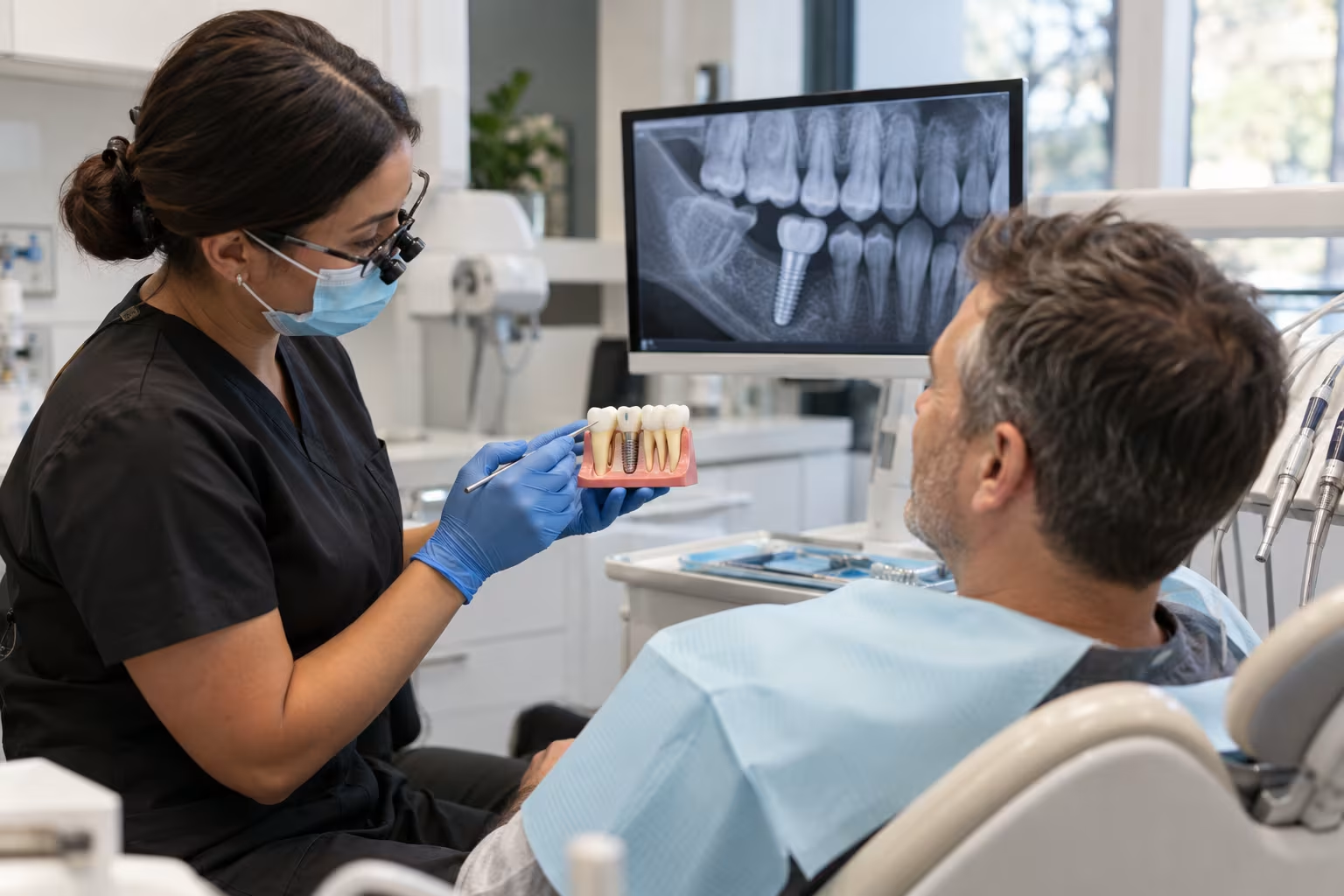
Treatment begins with a detailed examination and planning. X-rays or other imaging may be required to assess the jawbone and identify an appropriate position for the implant.
The implant is surgically placed into the jawbone, usually under local anaesthetic. A healing period then allows the bone to form around the implant and provide stability. Healthdirect notes that this process commonly takes around three months, although treatment time varies between patients.
Once healing is satisfactory, the implant can be restored with the planned crown, bridge or denture.
Dental implants require healthy supporting tissues and sufficient jawbone. Your dentist will also consider your general health, medications, gum health and factors such as smoking when assessing whether implant treatment is appropriate.
If there is insufficient bone or another condition affecting treatment, additional procedures or an alternative way of replacing the missing tooth may be discussed.
Any invasive or surgical procedure may carry risks. Before moving forward, it is recommended that you seek a second opinion from an appropriately licensed medical professional.
Preventive care for every age. Checkups every six months keep problems small, and children’s visits are gap-free with a health fund.
Whitening, veneers and clear aligners, planned with you so the result still looks like your own smile only brighter and straighter.
Broken, worn or missing teeth rebuilt to work properly again — crowns, bridges, implants and root canal treatment, staged at a pace you choose.