
Dental inlays and onlays are indirect restorations used to repair teeth that have lost or damaged tooth structure. They may be considered when a tooth requires more restoration than a conventional filling can provide but does not necessarily require a full crown.
An inlay generally fits within the biting surface of the tooth, while an onlay extends further over one or more of the raised areas, or cusps, of the tooth.
Onlays preserve more of the remaining tooth than a full crown because they cover the tooth less extensively. The appropriate restoration depends on how much healthy tooth structure remains and the type of damage present.
Your dentist may consider an inlay or onlay when:
An existing restoration is damaged or there may not be enough suitable tooth structure for another conventional filling.
Part of the tooth requires additional coverage and support while preserving healthy structure where possible.
The area requiring restoration is larger or subject to biting forces that may make another type of restoration more appropriate.
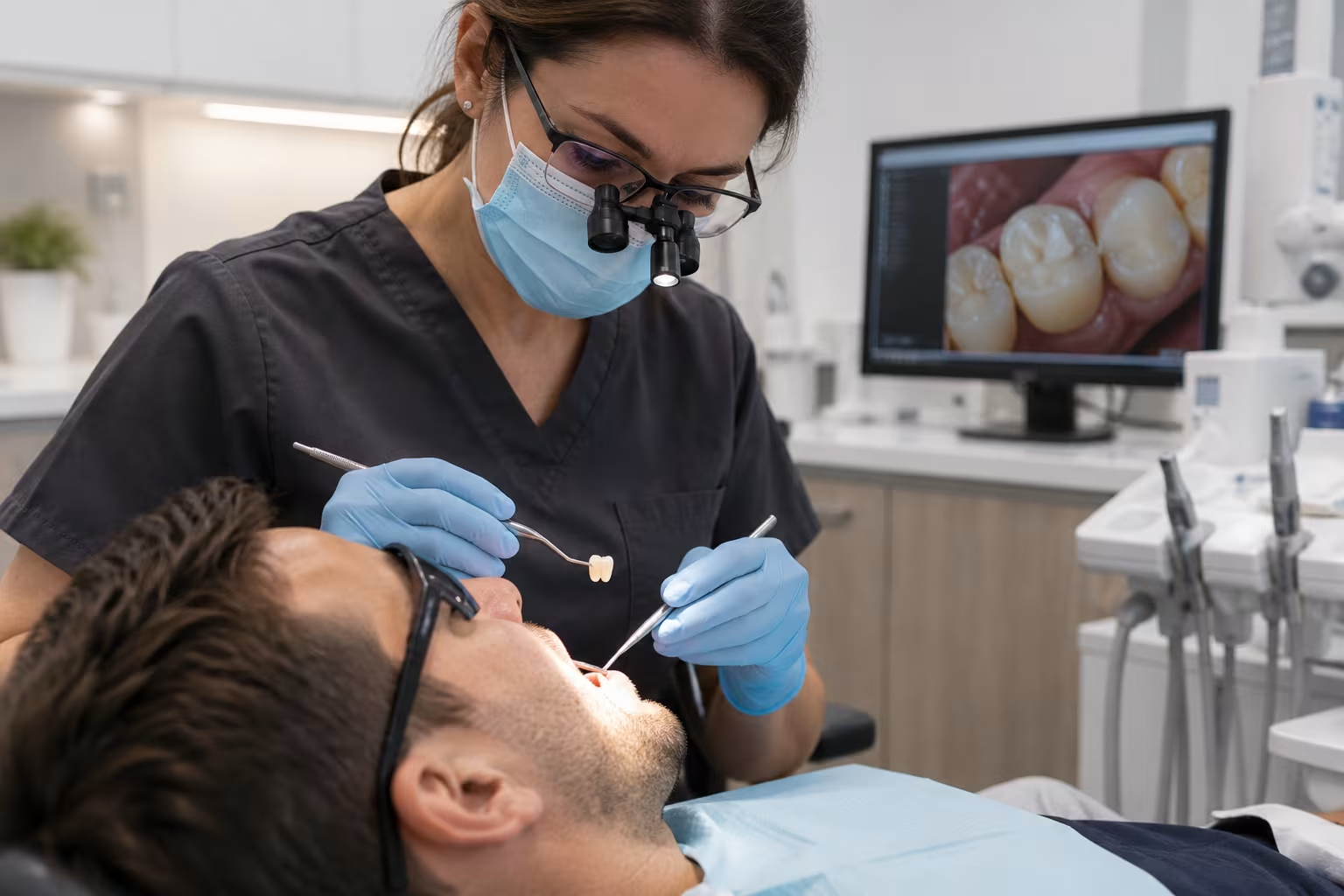
The damaged or decayed portion of the tooth is prepared before the restoration is made to fit the tooth precisely. Depending on the materials and technology used, treatment may involve more than one appointment.
The completed inlay or onlay is then bonded or cemented to the prepared tooth. Tooth-coloured materials may be used where appropriate to help the restoration blend with the surrounding teeth. The Australian Dental Association recognises indirect tooth-coloured inlays and onlays as restorative dental procedures.
Any invasive or surgical procedure may carry risks. Before moving forward, it is recommended that you seek a second opinion from an appropriately licensed medical professional.
Preventive care for every age. Checkups every six months keep problems small, and children’s visits are gap-free with a health fund.
Whitening, veneers and clear aligners, planned with you so the result still looks like your own smile only brighter and straighter.
Broken, worn or missing teeth rebuilt to work properly again — crowns, bridges, implants and root canal treatment, staged at a pace you choose.